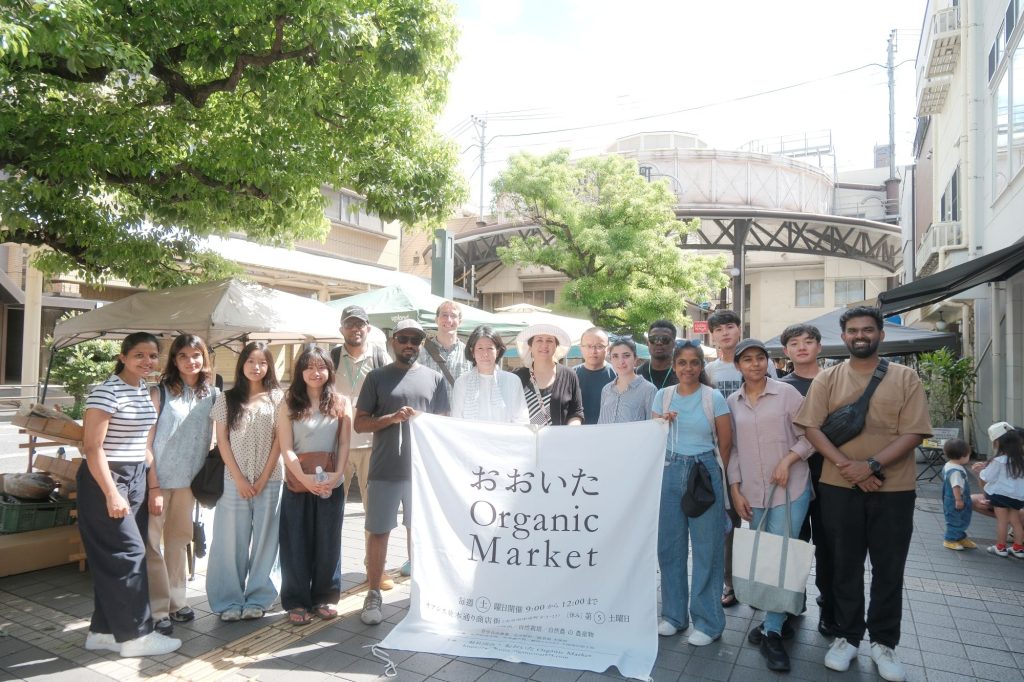
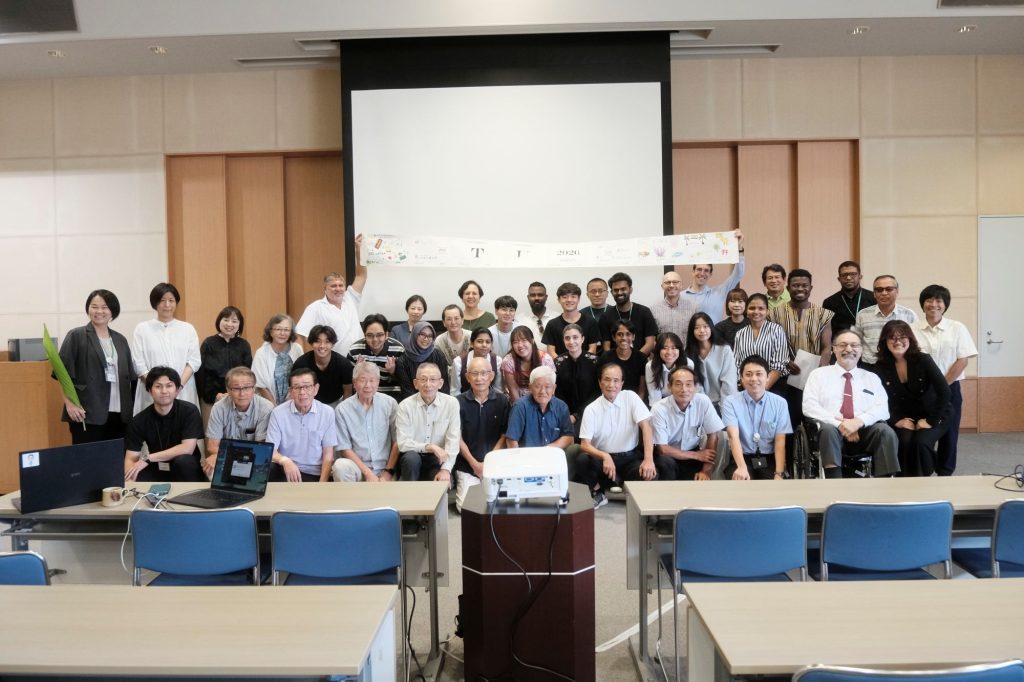
The Institute for Applied Material Flow Management (IfaS) of Trier University of Applied Sciences successfully completed the Travelling University 2026, held in Tachiarai town, Fukuoka Prefecture, Japan, in partnership with Ritsumeikan Asia Pacific University (APU), the Kyushu Institute of Technology (Kyutech), and AMITA Holdings CO., LTD., bringing together international students, researchers, and members of the local Tachiarai community.”
The Travelling University is a signature course of the International Material Flow Management (IMAT) programme at IfaS, designed to give students hands-on experience applying circular economy and resource management principles to real community challenges. The TU is realized within the PAJAKO project, funded by the DAAD and the Ministry of Foreign Affairs. It is the main measure within this two-year project: phase one was the academic exchange last year, and phase two was the Travelling University. It is a binational cooperation project between the two institutions, celebrating their 20th year of collaboration. This year’s edition, titled “Waste-Free Tachiarai: Bridging Towards a Sustainable Society,” examined how the town’s existing waste infrastructure could evolve into a driver of local circular value creation.
Two international student teams, Team IMAT, representing Trier University of Applied Sciences and drawing members from Iran, China, Mauritania, Ghana, India, and Sri Lanka, and Team Japan, comprising students from APU, Kyutech and partner institutions from Myanmar, the Philippines, Indonesia, Bangladesh, Cambodia, Sri Lanka, the United States, and Japan, worked side by side over the course of the programme, engaging directly with the Tachiarai community, local officials, and the town’s “Meguru Station” recycling collection points.
A central focus of the project was Tachiarai’s community centres, which the teams identified as an underused resource. Drawing on national data showing a 31% decline in public community halls (“kominkan”) since 1999 alongside a rising number of older adults living alone, the students proposed repurposing these spaces into multi-functional hubs, combining a repair café with 3D-printing capability, an upcycling centre, and a tool library, alongside opportunities for intergenerational skill exchange between residents.
The teams also examined the environmental and economic case for system-level change, including the potential of converting local rice-straw residue into biodegradable food packaging, and closing material loops through biodigesters and biochar production. Their analysis showed that individual recycling behaviour alone, for example, PET bottle recycling, offers only limited climate benefit compared to redesigning the underlying waste and material systems.
Throughout the programme, the teams engaged directly with residents, local business owners, and municipal representatives, culminating in a final presentation attended by community members, project partners, and university representatives from Japan and Germany. The proposed partnership model connects academia, local business, public institutions, health services, and volunteers around a shared, service-based approach to building a net-zero, resilient Tachiarai.
The successful conclusion of the 2026 Travelling University marks another milestone in IfaS’s ongoing commitment to experiential, community-based education. By connecting international students directly with local challenges, the programme continues to strengthen ties between academia and communities while advancing practical, scalable approaches to sustainable resource management.
Der Deutsche Akademische Austauschdienst (DAAD) fördert aus Mitteln des Auswärtigen Amtes (AA) das Förderprogramm „PaJaKo – Partnerschaften mit Japan und Korea“.